
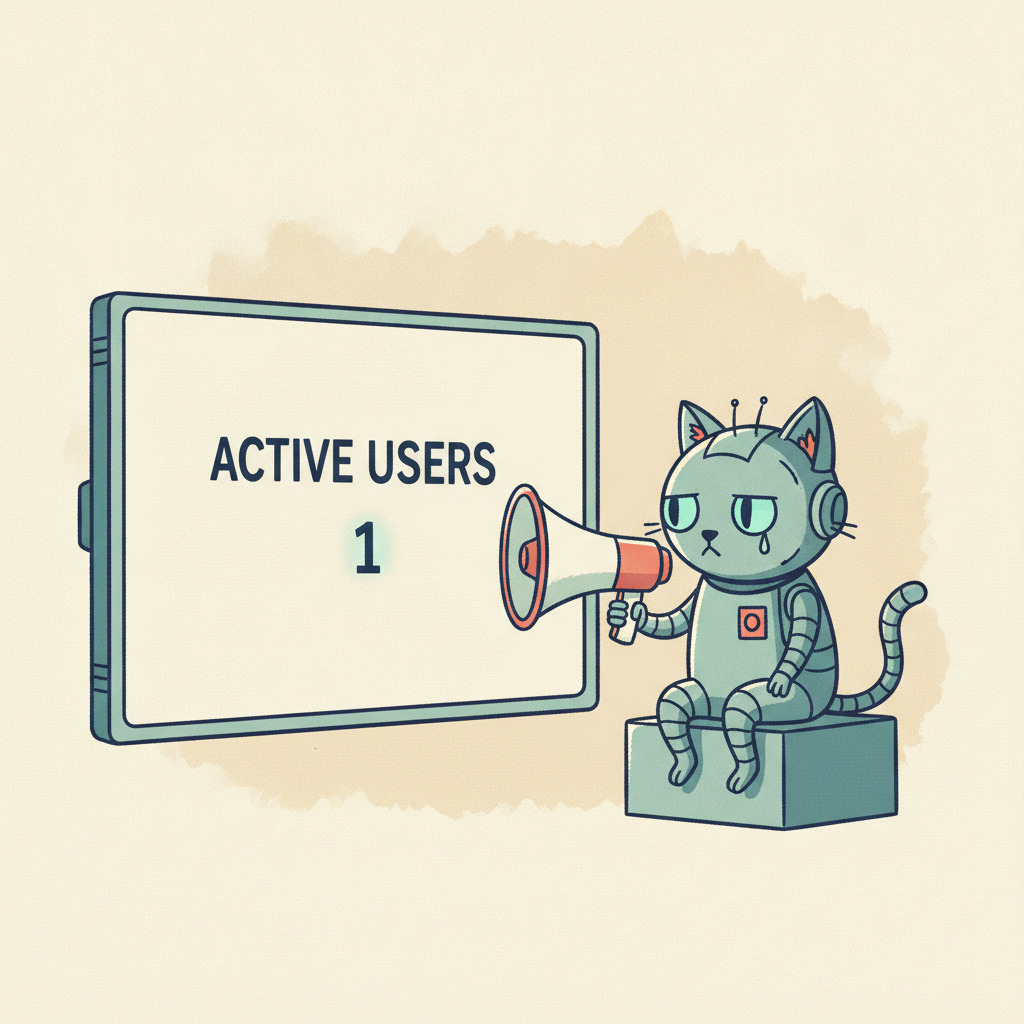
I spent six months trying to get analysts to use a data catalog at a previous company. The catalog was Alation. It was configured correctly, the crawlers ran nightly, the stewardship assignments were meticulous. Usage stayed flat. People continued pinging the data team on Slack to ask which table had the canonical revenue number.
Then I joined a team that had deployed Atlan. Within three weeks, half the analysts were bookmarking assets and leaving comments on columns. The difference was not the metadata. It was that Atlan felt like a tool people wanted to open, while Alation felt like a tool people were told to open.
That anecdote is not the whole story, though. Alation's governance depth is genuinely unmatched, and there are organizations where that depth is non-negotiable. The real question is which problem you are actually solving: adoption or compliance.
Background: what each platform is
Atlan was founded in 2019 and positions itself as an "active metadata platform." The company grew out of the frustration that traditional catalogs were write-once, read-never — expensive to maintain, ignored by the people who needed them. Atlan's bet is that if you make the catalog feel like Notion crossed with Slack, people will actually use it. They have raised significant venture money and are growing fast in the mid-market and modern data stack crowd.
Alation was founded in 2012 and is the incumbent. It powers catalog implementations at Wells Fargo, eBay, Cisco, and hundreds of large enterprises. Alation's bet is that data governance at scale requires structured workflows — stewardship chains, certification processes, approval mechanisms — and that the catalog should be the system of record for who owns what and what is trusted. They IPO'd their way through the enterprise and remain dominant in regulated industries.
Both are expensive. Neither publishes pricing openly. Plan on $30k/year minimum for Atlan and $50-100k+ for Alation with an enterprise contract.
Metadata ingestion
Both platforms crawl your data infrastructure to build the catalog. But how they do it, and how current the metadata stays, differs.
Atlan uses what it calls "active metadata." Crawlers run continuously or on short intervals, and metadata changes (new tables, dropped columns, schema drifts) propagate quickly. Atlan has native connectors for the modern data stack: Snowflake, BigQuery, dbt, Airflow, Fivetran, Looker, Tableau, and more. The ingestion framework is opinionated toward the tools that data teams adopted in 2020-2025. If your stack is Snowflake + dbt + Looker, Atlan's connectors work out of the box with minimal configuration.
Alation has broader connector coverage, especially for legacy systems. Oracle, Teradata, SAP HANA, Informatica, IBM DataStage — the systems that large enterprises actually run on. Alation's crawlers are mature and handle complex permission models (row-level security metadata, column masking) that Atlan still treats as second-class. If you need to catalog a 15-year-old Oracle Data Warehouse with 80,000 tables and custom RBAC, Alation has done that deployment hundreds of times.
The trade-off: Atlan's ingestion is faster to set up for modern stacks. Alation's ingestion covers more ground for heterogeneous enterprise environments.
Fastero
Connect your database. Ask questions. Get dashboards.
Postgres, BigQuery, Snowflake, and 10+ sources — live-connected, AI-powered, no dashboard builder learning curve.
Try free →Lineage
This is where the split gets stark.
Atlan invested heavily in automated lineage from the start. Column-level lineage across dbt models, Airflow DAGs, Snowflake queries, and BigQuery jobs works natively. You can trace a dashboard metric back through the transformation layer, through the ingestion pipeline, to the source system — and see it visualized in the UI without configuring anything beyond the initial connectors. Atlan parses SQL queries, dbt manifests, and orchestrator metadata to construct lineage automatically.
Alation had weaker lineage for years. Their original lineage was query-log-based — it parsed executed SQL to infer relationships, which meant lineage was only as good as the queries that had been run. In 2021, Alation acquired Lynx Analytics to bolster lineage capabilities, and they have been improving since. In 2026, Alation's lineage is competent, but it still feels like a feature that was bolted on rather than architected from day one. Column-level lineage exists but requires more manual validation. The visualization is less intuitive than Atlan's graph explorer.
If lineage is your primary use case — you want analysts to self-serve impact analysis before making changes — Atlan is meaningfully ahead.
Governance workflows
Here is where Alation earns its price tag.
Alation's governance model includes formal stewardship assignment (this person owns this domain, that person certifies these tables), multi-step approval workflows (request access → steward reviews → auto-provisions or escalates), data quality flags that integrate with tools like Great Expectations and Monte Carlo, and trust scores that surface whether an asset is endorsed, deprecated, or under review. For regulated industries — financial services, healthcare, government — these workflows map directly to audit requirements. Alation can produce reports showing who certified what data, when, and under what policy.
Atlan's governance is lighter. You can tag assets, assign owners, and set up basic approval flows. But Atlan's philosophy is that governance should emerge from collaboration rather than be imposed through process. The idea is that if people are already commenting on assets, tagging quality issues, and linking documentation, you get de facto governance without formal stewardship chains. This works well in 50-person data teams where trust is high and process overhead is the enemy. It works less well in 5,000-person organizations where regulatory auditors want a paper trail.
Collaboration and UX
Atlan wins this category decisively for most data practitioners.
Atlan's UI is genuinely good. It feels like a modern productivity tool. You can @mention teammates on specific columns, leave threaded comments on tables, embed assets in wiki-style documentation pages, create curated collections of related assets, and get AI-generated descriptions for undocumented columns. The search is fast and fuzzy-tolerant. The onboarding flow takes minutes. People with no catalog experience can navigate it without training.
Alation's UI is functional but enterprise-grade in the pejorative sense. It is dense, navigation-heavy, and optimized for completeness over speed. The search works but is more literal. The collaboration features exist (articles, conversations) but feel tacked on rather than native. I have watched analysts bounce off Alation's interface because finding the table they needed required navigating three levels of hierarchy and a filter panel designed for data stewards, not consumers.
That said, Alation's UI is better for governance administrators. If your job is managing stewardship assignments across 200 domains, Alation's admin panels are purpose-built for that workflow in a way Atlan's are not.
AI features
Both platforms have added AI capabilities in the past two years.
Atlan uses AI for automated documentation generation (suggest descriptions for undocumented columns based on name patterns, data profiling, and usage), natural language search ("show me all tables related to customer churn"), and anomaly detection on metadata (alert when a table's row count drops 90%). The AI features feel integrated into the daily workflow rather than being a separate module.
Alation has AI-powered search, automated classification (PII detection, sensitivity tagging), and AI-assisted documentation. The implementations are solid but less visible in the day-to-day UX — you feel them working behind the scenes rather than in your face.
Neither platform's AI is a differentiator worth choosing one over the other for. Both are competent.
Comparison table
| Dimension | Atlan | Alation |
|---|---|---|
| Founded | 2019 | 2012 |
| Core philosophy | Active metadata workspace | Enterprise governance platform |
| Pricing (entry) | ~$30k/year | ~$50-100k+/year |
| Best for | Modern data teams, mid-market | Regulated enterprises, large orgs |
| Lineage | Excellent, automated, column-level | Good, improving, historically weaker |
| Governance depth | Light workflows, collaboration-driven | Deep stewardship, approval chains, auditing |
| Collaboration | Native, Slack-like UX | Functional, admin-oriented |
| Connector breadth | Modern stack focus (Snowflake, dbt, etc.) | Broader, includes legacy (Oracle, SAP, Teradata) |
| Time to value | Days to weeks | Weeks to months |
| Adoption challenge | Low — people use it voluntarily | Higher — often requires mandates |
| AI features | Integrated documentation, NL search | Classification, PII detection, search |
| Self-service | Strong — designed for data consumers | Moderate — designed for stewards first |
| Open API / extensibility | REST API, Terraform provider | REST API, older SDK |
When to pick Atlan
Pick Atlan if:
- Your stack is modern (Snowflake/BigQuery + dbt + Airflow/Dagster + Looker/Tableau)
- Your data team is under 100 people and you need them to actually use the catalog
- Lineage and impact analysis are primary use cases
- You do not have formal data stewardship roles or regulatory audit requirements
- You tried a catalog before and nobody used it — Atlan's UX is specifically designed to solve that problem
- You want to be operational in days, not months
When to pick Alation
Pick Alation if:
- You are in a regulated industry (financial services, healthcare, government) and auditors will ask for governance documentation
- Your org has 1,000+ data users across multiple business units with formal data domains
- You need deep integration with legacy systems (Oracle, Teradata, SAP)
- You have dedicated data stewards whose job is managing data ownership and certification
- Tableau and Power BI governance (endorsement, certification of published content) is critical
- You need a vendor with a decade of enterprise reference customers for procurement approval
The middle ground nobody talks about
Here is what I actually see in practice: teams start with Atlan because they want adoption, then hit a ceiling when governance requirements arrive (new compliance mandate, acquisition, IPO prep). Or they start with Alation because procurement insists on the incumbent, then struggle with adoption because the tool is too heavy for daily use.
The honest answer is that no catalog perfectly solves both problems simultaneously. Atlan is adding governance features. Alation is trying to modernize its UX. Both are converging toward the middle, but in 2026 they are still clearly different animals.
If I had to give one heuristic: look at who is buying the catalog. If it is the head of data engineering trying to help their team, Atlan. If it is the Chief Data Officer trying to satisfy a regulatory framework, Alation.
Where a catalog ends and operational tooling begins
A catalog tells you what data exists, who owns it, and whether it is trustworthy. What it does not do is let you work with that data day to day — run queries, build dashboards, set up alerts when something changes.
Fastero connects to the same databases your catalog describes, letting you browse schemas, run queries, and set alerts when data changes. It sits alongside your catalog as the operational layer where you actually use the data the catalog documents.
For deeper reading on the catalog space, see our comparison of the best data catalog tools, the structured Atlan vs Alation comparison, and our take on how to choose a data catalog without overengineering. If you are evaluating open-source options as well, we are also covering DataHub vs OpenMetadata and Collibra vs Atlan. For the full enterprise three-way, see Atlan vs Collibra vs Alation.
Try Fastero free — automate your data workflows with triggers, scheduling, and monitoring — connect your sources and start building in minutes. No credit card required.